

About us
Somebody has to still be here in ten years.
We wrote the ledger, the network protocol and the offline payment technology ourselves, in Stockholm. Owning them is what lets a record still work in ten years.

Why we own the layer underneath.
A record that carries legal weight has to outlast the contract it started in, the regulation behind it and the device it was signed on.
That is why we own the layer underneath instead of renting it.
Control belongs with whoever creates the value.
Identity, data and financial access sit in systems most participants do not own.
So we build for a different arrangement. You prove who you are without handing over the record that proves it. What is yours carries its own history.
Two things follow. The admin between the steps stops existing, because nobody re-checks what is proved.
And deals never worth the paperwork become ordinary: letting an empty parking space, owning a tenth of a coffee harvest, running club money without anyone’s private bank account.

Who builds it, and who picks up the phone.
Neuro is built in Stockholm by a team small enough that whoever wrote the ledger code is who picks up when it matters.
Engineers, designers and specialists who would rather show you the working thing than the roadmap.
A ledger, a protocol, a cash technology, a seat in the standards body.
Neuro is not a set of other people’s services under one logo. We wrote the ledger, the protocol and the payment technology ourselves.
Neuro-Ledger®
A distributed ledger we wrote ourselves, deliberately not a blockchain. Only those entitled to read a record can read it, and records can be corrected when the law requires it.
How the ledger worksNeuron™ protocol
The network layer above the ledger. Each organisation runs its own installation and still exchanges checked identity, agreements and payments with the rest.
What is a Neuron?e-Daler®
Patented electronic cash with a property almost nothing else has: it works with no network. Value passes straight between two parties and settles later.
Wallets and paymentsStandards work
Our founder, Peter Waher, contributes to IEEE P1451.99 on IoT harmonisation, work that intersects IEEE 2933 on trust, identity, privacy and safety.
Protocols and interoperabilityThe open-source core is free for non-commercial use. Commercial use requires a licence.
The work, as it actually looks.
Our own rooms, our own screens, and the people in them.
-
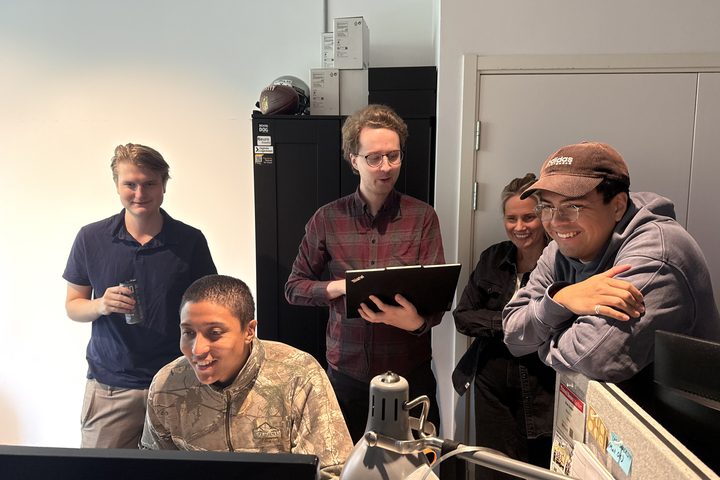
A build review, Stockholm office. -
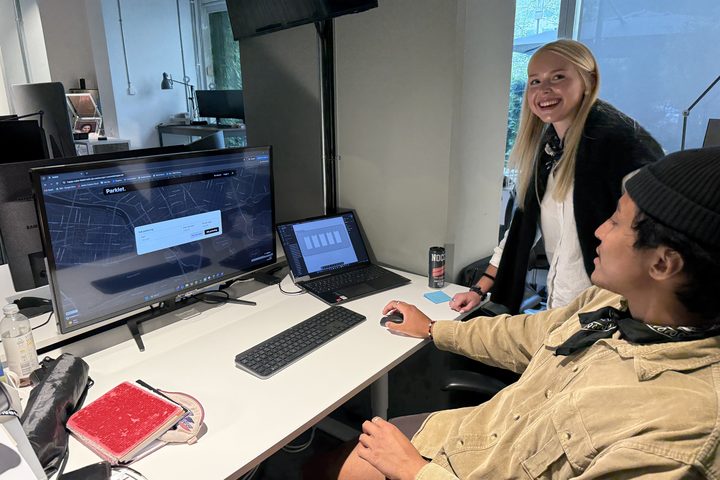
Erika and Elias, working on Parklet. -
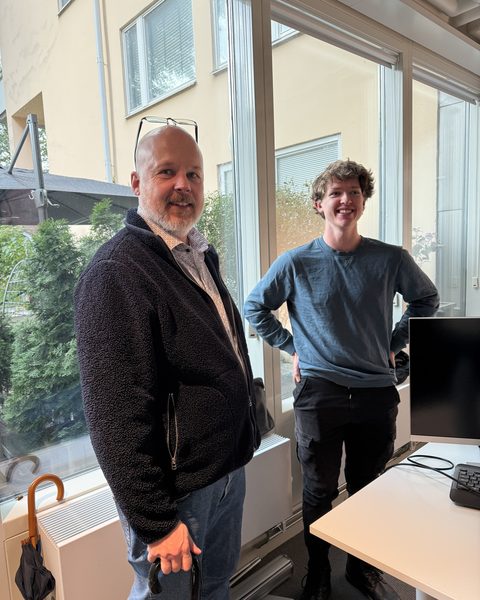
Peter and Viggo, between two things. -
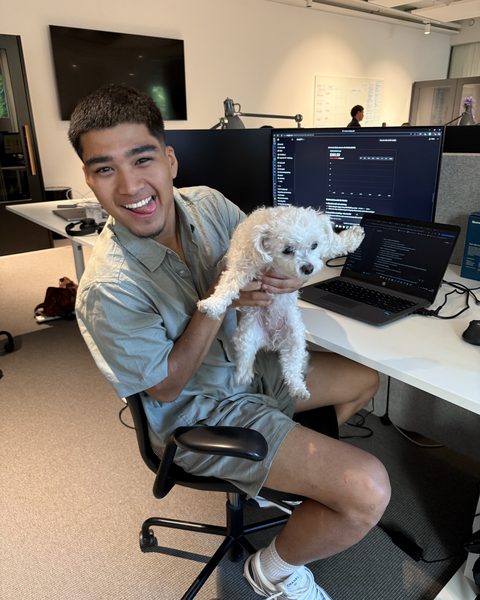
An ordinary afternoon at the desks. -
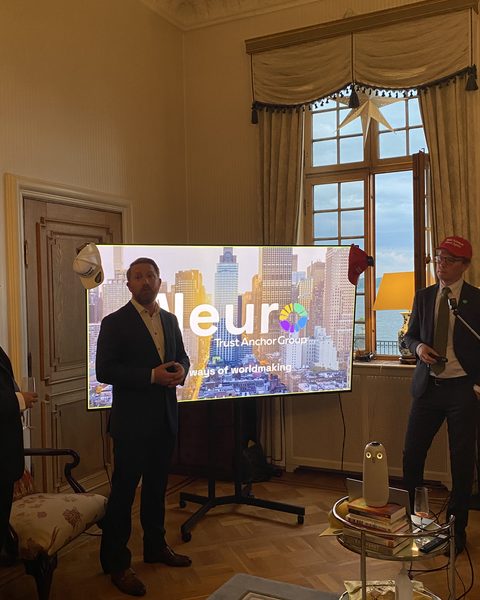
Presenting Neuro to an invited audience. -
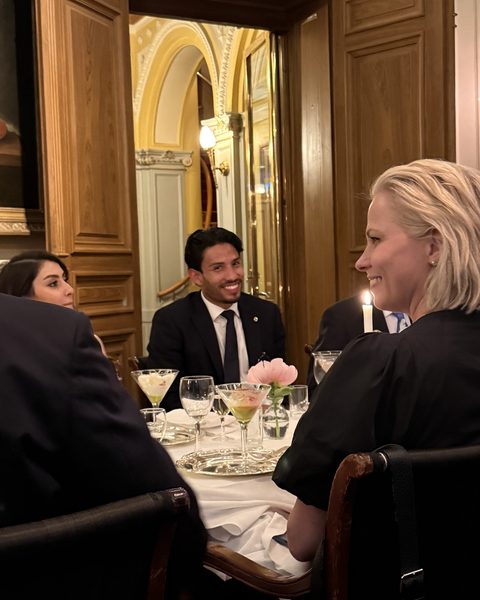
Mateo, at a Trust Anchor Group dinner.


Start with one. Earn the next.
A first deployment is one module against one real constraint, not a replacement programme. It begins with a conversation rather than a licence.

Assessment
We map the workflow, the parties, the systems and the constraints. Sometimes the useful answer is that you do not need Neuro.
One scoped problem
One module, one contained problem, one measurable result. It should reduce a cost, remove a delay or close a risk before it grows.
Deployment and support
Deploy in the cloud or on your own hardware, as one module or a Neuron™ installation of your own. Extend when the next workflow calls for it.